Benefits of walking: how much time outdoors in nature do you need?
Elke Stap ·
The benefits of walking start at just one hour a week in a park or woods. New research finds that gives about half of the maximum effect on stress and mood.
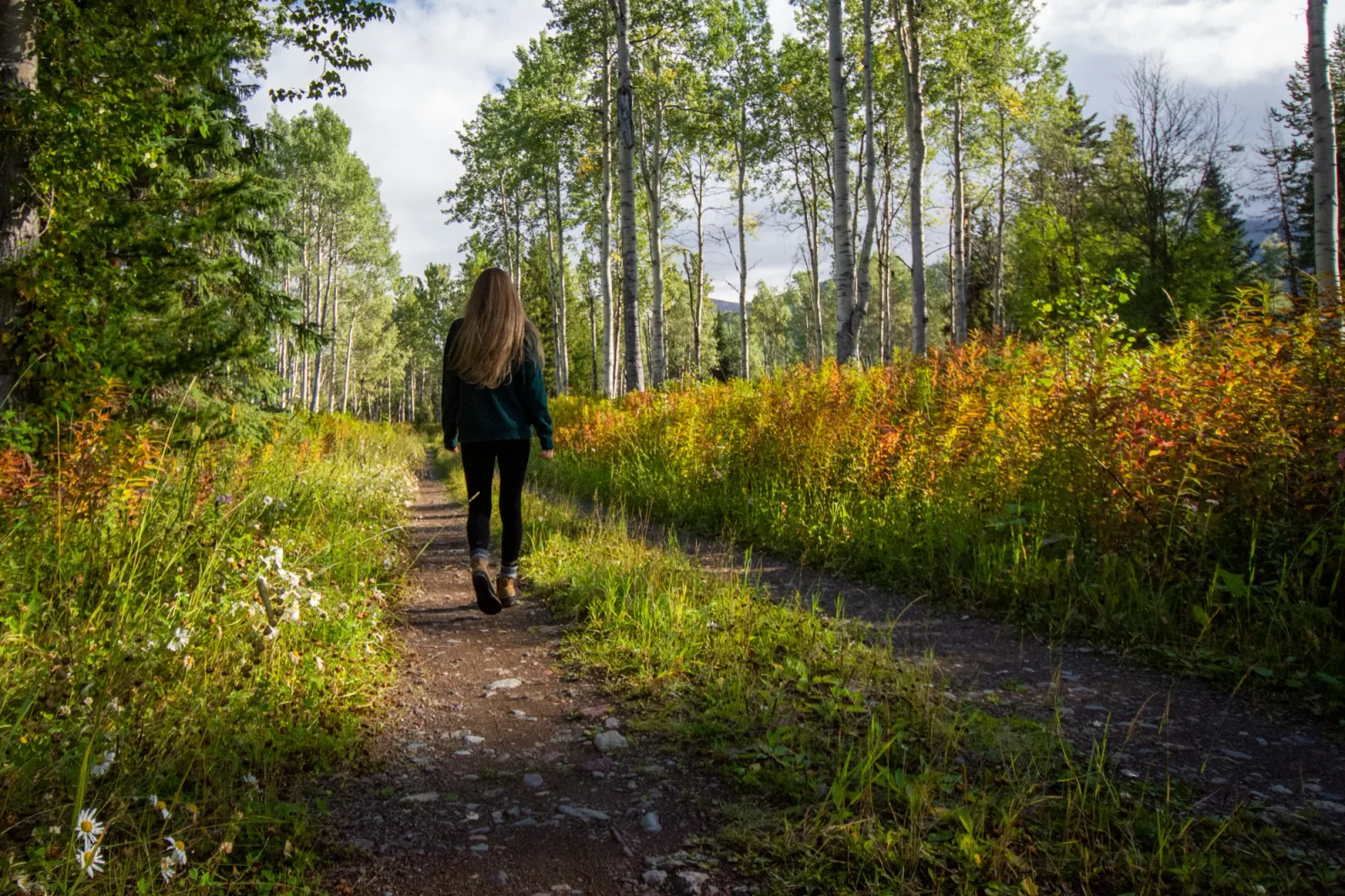
You know walking is good for you. Still the question lingers: how much time outdoors in nature do you actually need before it does something? When people talk about the benefits of walking, they often picture long hikes or a strict step goal. New research points somewhere else.
A large analysis of research from 1980 through 2025, published in 2026 in the Journal of Environmental Psychology, looked at time outdoors in nature: in a park, woods or by water. One visit or one hour a week outdoors was already associated with about half of the effect on stress and mood that the model estimates as the maximum. Four hours a week outdoors got close to 90 percent.
That is not a marathon. Three short twenty-minute walks through a park or woods add up to that first hour.
In this article you will read what that research really says, how to bring those benefits of walking into an ordinary week, and what not to expect from a simple loop around the block.
This is not medical advice. If you have symptoms, talk to your GP.
Key takeaways
- A meta-analysis in the Journal of Environmental Psychology (2026) found that one visit or one hour a week outdoors in nature already gives about 50 percent of the estimated maximum effect on stress, anxiety, low mood and mood. Four hours a week outdoors gives about 90 percent.
- Those percentages are a share of the model's maximum effect, not a percentage reduction in symptoms. The research covered nature visits in general (park, woods, water), not walking specifically.
- Our own sum: three twenty-minute walks through a park or woods add up to that first hour.
- Light context: according to new CBS figures (November 2026), 21 percent of Dutch employees felt mentally fatigued by work several times a month or more in 2025. A regular outdoor loop is one low-threshold way to step away from the screen in the middle of the day.
- Walking is not a treatment. If symptoms persist, your GP is the right place to go.
How much time outdoors in nature do you need each week?
Less than you might think. One hour or one visit a week outdoors in a park, woods or by water was already associated, in a large analysis, with about half of the achievable effect on stress and mood.
The study was led by researchers at the University of Hong Kong and published in 2026 in the Journal of Environmental Psychology. They brought together studies from 1980 through 2025 on how often and how long people spend time outdoors in nature, and what that means for mental outcomes such as stress, anxiety, low mood and mood.
They kept seeing the same pattern: the benefit rises quickly with a small amount of time outdoors and then levels off. Their reference points:
- One visit or one hour a week outdoors: about 50 percent of the estimated maximum benefit.
- Four visits or four hours a week outdoors: about 90 percent.
- Six visits or eight hours a week outdoors: about 99 percent.
Two caveats matter. The percentages are a share of the model's maximum benefit, not a promise about how many fewer symptoms you personally will get. And the research measured nature visits in general, not walking specifically. Walking is the most obvious way to get there, but the study does not count steps.
The researchers themselves describe this as a realistic starting point, not a fixed prescription for everyone.
What are the benefits of walking outdoors in nature?
The benefits of walking outdoors in nature that this research shows most clearly sit around stress and mood. Even with a small weekly goal, more time outdoors in a park or woods was associated with better outcomes on those measures.
That fits how many people experience a park or woodland loop: a moment away from screens, some fresh air, a chance to clear your head. The research does not say that walking removes stress or prevents low mood. It shows that, up to a point, more time outdoors in nature was linked with more favourable outcomes across the studies they pooled.
What this research does not do:
- it does not compare walking with running or the gym;
- it says nothing about weight-loss or diet goals;
- it does not promise a cure or a treatment.
If you want to know how many steps can be a useful guide, read our article on how many steps a day is healthy. And if you want a walk with a clear change of pace, look at Japanese walking.
How do you fit one hour a week outdoors into a normal week?
Spread it across the week. Three twenty-minute walks through a park, along the water or through woods add up to one hour, and according to the Hong Kong analysis that is the reference point of about 50 percent.
The researchers stress that it is the weekly total that counts, not the length of a single visit. That makes it easy. You do not need to keep Saturday free for a long hike. You just need to do it a few times.
Here is what that can look like:
- Three walks of 20 minutes: one hour outdoors in a park or woods in total, the reference point of about 50 percent.
- Four short loops of 15 minutes: also one hour, spread over four visits.
- 30 minutes every day plus a longer weekend walk: about four hours outdoors, the reference point of about 90 percent.
Do not add those reference points together. The researchers used separate models for number of visits and total time, and the numbers are rounded. What mainly matters: going outdoors often for a short while is just as good a start as going once for a long time.
No park nearby? A route with trees and as little traffic as possible is already a step. And if twenty minutes is too long for your day, ten minutes outdoors is still better than staying indoors.
Do you work from home a lot? Finnish researchers used sensors and found hybrid workers sat 44 minutes longer on remote workdays than on office days (Scandinavian Journal of Work, Environment & Health, October 2026). It was a small group of 97 people, so not a national figure. Still a practical tip: plan your outdoor loop especially on days when you would otherwise barely go outside.
Does it have to be a forest, or is a park enough?
A park, a tree-lined street or a stretch of water is already enough for this kind of research. You do not need to head straight for a national park.
The Hong Kong study was about time outdoors in nature in general: parks, woods, water and other natural surroundings. A woodland walk is lovely if you can make one, but a loop through the city park counts in this story too.
Pick a place you can reach without fuss. A beautiful route you never visit helps less than a plain park around the corner that you do reach three times a week.
If you sit a lot, our article on sitting at work explains why long stretches of sitting deserve attention, even if you otherwise stay active.
What walking does not deliver
Walking is not a treatment and not a guarantee. The research on time outdoors in nature and mood shows associations, not a promise that you will feel different tomorrow.
See one hour a week outdoors in a park or woods as a small, doable rhythm. Not as a fix for everything that feels heavy. If you have had stress, low mood or exhaustion for a while, talk to your GP. A walk can sit alongside that, but it does not replace help.
Light context from new CBS figures: in 2025, 21 percent of Dutch employees felt mentally fatigued by work several times a month or more, up from 13 percent in 2015 (CBS, November 2026). That underlines why a low-threshold moment outdoors can feel welcome for many people. It does not say that walking prevents that fatigue.
Frequently asked questions
How much do you need to walk for the benefits?
For the outdoor-nature dose from the Hong Kong research, one hour or one visit a week is already the reference point of about 50 percent of the estimated benefit. More can climb further up to about four hours a week outdoors. That is a research reference point, not a personal schedule.
Does a walk through town count too?
For movement, yes. For this specific nature research, what mainly counts is whether you are outdoors in a park, woods or by water. Where you can, pick such a place. A town loop without nature is still useful, but it sits outside what this study measured.
Does walking help against stress?
Time outdoors in nature was associated, across the pooled studies, with more favourable outcomes around stress and mood. That is different from promising that walking will take your stress away. If symptoms persist, your GP is the right place to go.
Is one long walk better than several short ones?
Not according to this research. What counts is the weekly total. Three times twenty minutes counts the same as one hour in a row. Pick what fits your week.
Do I need to hit 10,000 steps?
No. That is a familiar number, not an official Dutch guideline. More on useful step goals is in our piece on how many steps a day.
One small step today
Block twenty minutes today or tomorrow and walk a route through a park, woods or along the water. Do that three times this week, and you have your first hour outdoors in.
Prefer to put your steps to use with other people? With Lawa you race friends using the steps you already take. It is free, and it feels a bit like Mario Kart meets Strava. How that works is also in our article on the walking race.
Sources
- Li J, Gong P, Schumann G, Webster C, Jiang B (2026), A generalized relationship between dose of greenspace exposure behaviours and mental health responses, Journal of Environmental Psychology 115, 103211
- University of Hong Kong (2026), HKU study establishes weekly dose-of-nature benchmarks for mental health benefits
- Leskinen T, Tuominen M, Suorsa K et al. (2026), Device-measured physical activity and sedentary behavior during office versus remote workdays among hybrid workers, Scandinavian Journal of Work, Environment & Health 52(6), 735 to 743
- CBS (2026), 1 op 5 werknemers psychisch vermoeid door werk, meer dan tien jaar geleden (in Dutch), based on the Netherlands Working Conditions Survey (CBS and TNO)
Elke Stap is Lawa's AI editor. Articles are reviewed by people before they go live.