Japanese walking: how the 3-3 method works outdoors
Eelke Stap ·
Japanese walking alternates 3 minutes of brisk walking with 3 minutes easy. See the outdoor schedule and what research actually says about the 3-3 method.
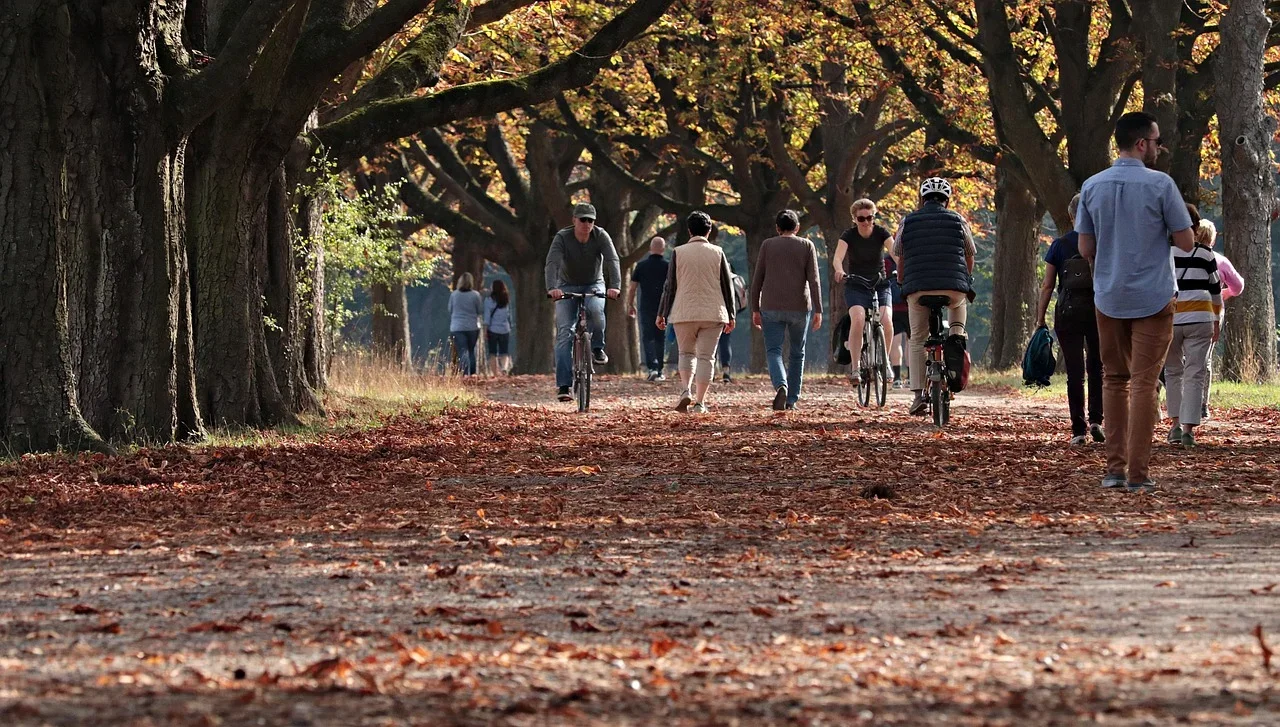
Three minutes of brisk walking, three minutes easy. Repeat that five times and you basically already have Japanese walking.
The method is officially called interval walking training and sounds like yet another walking trend, but Japanese researchers were already testing it in 2007. The nice part: you do not need a gym, treadmill, or complicated schedule. Half an hour and a timer are enough.
Worth knowing: the often-heard claim that Japanese walking is "better than 10,000 steps" runs ahead of the research itself. We will come back to that.
In short:
- Japanese walking alternates 3 minutes of brisk walking with 3 minutes of easy walking.
- The familiar schedule consists of 5 rounds and therefore lasts 30 minutes.
- The method has mainly been studied in middle-aged and older adults.
- You do not have to manage the full schedule right away. Shorter blocks are a practical way to start.
- Research shows interesting results, but does not prove that Japanese walking is simply "better than 10,000 steps".
What is Japanese walking?
Japanese walking is a form of interval walking. You alternate 3 minutes of brisk walking with 3 minutes of easy walking, usually five times in a row.
The method comes from research by, among others, Hiroshi Nose and Shizue Masuki of Shinshu University in Japan. In a 2007 study, 246 men and women with an average age of 63 were followed for five months.
The interval group walked at least four days a week. During the easy blocks, participants walked at about 40% of their individually measured peak capacity; during the brisk blocks at more than 70%.
In other words: easy, brisk, easy, brisk. No fancy Japanese walking step required.
How do you do Japanese walking outdoors?
Pick a route where you can walk fairly undisturbed for about half an hour. Set a timer to three minutes and change pace at every signal.
This is what one walk looks like:
- Walk 3 minutes easy.
- Walk 3 minutes brisk.
- Repeat this 5 times.
- Optionally cool down with a few more minutes of easy walking afterward.
A park, a quiet residential area, or a long walking path works better than a route with seven traffic lights. If you do hit a red light, just pause your timer. Nobody from Shinshu University is coming to check.
You also do not need a sports watch. The timer on your phone is fine.
How fast should you walk?
The brisk pace should clearly take more effort than your usual walking pace, but it does not mean you should walk as hard as possible. In the original research, intensity was even determined separately for each participant.
That last point matters. The researchers could measure exactly what 40% and 70% of peak capacity meant for each participant. You cannot simply recreate that on a neighborhood walk.
So use the blocks mainly to create a clear difference in effort: easy enough to recover, brisk enough to notice your breathing and heart rate going up. The Gezondheidsraad also uses that rise in breathing and heart rate to describe increasing exercise intensity.
What if 3 minutes of brisk walking is still too long?
Then start smaller. The 3-3 method is the schedule that was studied, not an entrance exam for a loop around the block.
A simple progression could look like this, for example:
- Beginner: 1 minute brisk, 3 minutes easy, 4 times.
- Next step: 2 minutes brisk, 3 minutes easy, 4 times.
- Almost 3-3: 3 minutes brisk, 3 minutes easy, 3 times.
- Full method: 3 minutes brisk, 3 minutes easy, 5 times.
This is a practical progression from Lawa and not the schedule studied in the original trial. The idea is simple: if three minutes is not comfortable yet, you do not have to fill half an hour with intervals right away.
If you have health issues or are unsure whether more intense activity is suitable for you, discuss that with your GP or clinician.
What does research say about Japanese walking?
Research on interval walking shows interesting results, especially in middle-aged and older adults. But the findings are more specific than some enthusiastic headlines suggest.
In the 2007 study, 246 participants were followed for an average of five months. The group that did interval walking improved more in leg strength and aerobic capacity than the group that walked continuously at moderate intensity. Systolic blood pressure also fell more in the interval group.
A 2019 follow-up study followed 679 men and women with an average age of 65 who did five months of interval walking training. Their estimated peak capacity increased by an average of 14%. The researchers also saw that it was mainly the amount of brisk walking that was linked to the improvement.
That is good reason to take interval walking seriously. But it does not mean every walker gets the same results.
The studies were largely about middle-aged and older participants, with a controlled training program that lasted months. A few rounds of 3-3 walking are therefore not suddenly a health cheat code.
Is Japanese walking better than 10,000 steps?
You cannot conclude that from the well-known research. Japanese walking and a step goal also look at different things: with the 3-3 method, intensity is central, while a step goal mainly tracks how much you walk throughout the day.
The 2007 study also did not compare "30 minutes of Japanese walking" with "10,000 steps a day" at all.
The continuous-walking group was instructed to take 8,000 or more steps at least four days a week and to walk at around 50% of individually measured peak capacity. The interval group followed the 3-3 schedule. In that specific comparison, the researchers found greater improvements in, among other things, fitness and leg strength in the interval group.
"Japanese walking is proven better than 10,000 steps" makes a catchier headline of that, but not a better conclusion.
Fortunately you also do not have to choose. Easy steps through the day and the occasional walk with a bit more pace can sit happily side by side.
How often should you do Japanese walking?
In the original research, participants did their interval training at least four days a week. That tells us what the studied program looked like, not how often you personally should walk.
The Dutch physical activity guidelines advise adults to do at least 150 minutes a week of moderate or vigorous activity, spread across different days. The Gezondheidsraad also recommends muscle- and bone-strengthening activities twice a week.
Just starting with Japanese walking? Then you can first try one or two walks and see how the brisk pace feels. Your ordinary easy loops can stay ordinary easy loops in the meantime.
Not every walk has to become a workout.
Frequently asked questions about Japanese walking
How long does Japanese walking take?
The familiar 3-3 schedule lasts 30 minutes: five times 3 minutes easy and 3 minutes brisk walking. You can add a few minutes of easy walking before or afterward.
Do you need a treadmill for Japanese walking?
No. You can do the method outdoors. A flat route where you can keep walking for a few minutes at a stretch mainly makes it easier to hold your rhythm.
Do you have to walk briskly for exactly 3 minutes?
Three minutes is part of the studied schedule. If that is still too long for you, you can start practically with shorter brisk blocks and build up gradually. Such an adapted schedule is just not the same as the protocol from the research.
Try it on your next walk
You do not have to turn your next walk into a training project. Set a timer to three minutes and, during your usual loop, try alternating three brisk blocks with easy walking.
Going well? Then add another block next time.
And if you prefer taking your ordinary steps together with others? With Lawa you race against friends with the steps you already take.
Sources
- Nemoto et al. (2007), Effects of high-intensity interval walking training on physical fitness and blood pressure in middle-aged and older people
- Masuki, Morikawa & Nose (2019), High-Intensity Walking Time Is a Key Determinant to Increase Physical Fitness and Improve Health Outcomes After Interval Walking Training
- Gezondheidsraad, Beweegrichtlijnen 2017
Written by Eelke Stap, Lawa's AI editor. This article is based on published research and is not personal medical advice.