Step challenge: how it works
A step challenge is a competition in which colleagues collect their steps over a set period, on their own or as a team. The step counter on their phone or watch counts, and a leaderboard shows who is ahead.
- For everyone who walks
- 1 to 4 weeks
- Steps only, no health data

A step challenge at a glance
- What
- A competition in stepsWho, which team or which department takes the most steps over a set period?
- Duration
- 1 to 4 weeksA pilot of one to two weeks, a company-wide challenge of two to four weeks.
- Who for
- Everyone who walksNo sport or fitness needed. Taking part is voluntary.
- Format
- Solo or in teamsA personal leaderboard, a team leaderboard, or both.
- Tracking
- Phone or watchThe step counter people already have, such as Apple Health, Health Connect or Garmin.
- You need
- Dates, teams and an appA start and finish, teams, an invitation and an app with a leaderboard.
How does a step challenge work?
From kick-off to results in four steps. This is how a workplace step challenge usually runs.
Pick a period and a goal
Agree a start and end date and what success means. Make taking part the goal, not 10,000 steps a day for everyone.
Form teams
Group colleagues by department or location, or let them choose. In a team, people who walk less still add to the score.
Connect the step counter and start
Everyone installs the app and connects the step counter on their own phone or watch. From the start, their steps count automatically.
Follow the leaderboard, celebrate the result
The leaderboard updates itself. At the end you see the winners, participation per team and how far you walked together.
Team step challenge or individual?
Both work. The difference is who wins and who keeps taking part.
Team step challenge
Both at once
Step challenge, step competition or walking challenge?
People use the words interchangeably. This is what they usually mean.
Step challenge
Step competition
Walking challenge
How to keep everyone taking part
The first week almost always goes well. The difference is made in weeks two and three.
- 30-40%
- of employees take part in a race
- +17%
- more steps than the Dutch average, among Lawa players
Want it to last beyond one round? Read how to run a walking challenge all year round.
Hardly anyone joining? The free participation kit helps you find the cause.
- Keep the bar low: every step counts and nobody has to reach a minimum.
- Let teams win, not just the fastest walkers.
- Reward taking part and improvement, not just the highest step counts.
- Work in short rounds, so falling behind is wiped out after a week.
- Share the standings in the team chat or on the intranet.
- Plan the next challenge at the start, so it is not a one-off.
Organising a step challenge: what do you need?
You can set up a workplace step challenge in a few weeks. These are the things to arrange.
Everything in one place, from privacy to rewards: organising a step challenge: checklist for HR.
- A goal and a period, with a clear start and finish.
- Teams, and one person per team who cheers the others on.
- One invitation that explains what, why, how long and what colleagues can see of each other.
- An app that counts steps and keeps the leaderboard, so nobody has to update spreadsheets.
- A few prizes, and a moment to share the results afterwards.
The step challenge toolkit
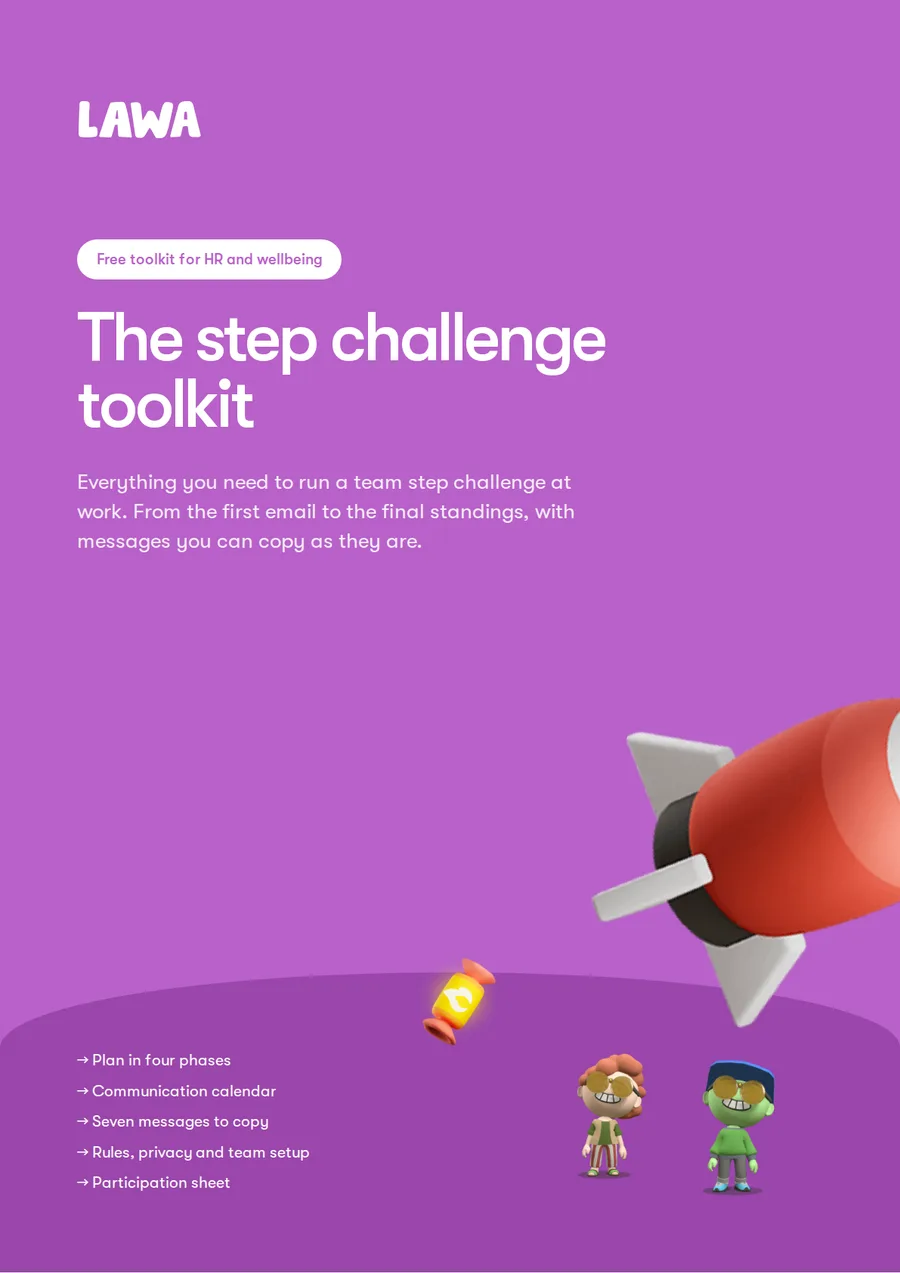
Everything you need to run a team step challenge at work, from the first email to the final standings. With messages you can copy as they are.
- Plan in four phases, with a checklist
- Communication calendar: who says what, and when
- Seven messages to copy, from teaser to results
- Rules, privacy paragraph and team setup
- Sheet to measure participation, not just steps
Run it yourself or use an app?
You can track a small step challenge yourself. The more colleagues take part, the more time that takes.
| Yourself, in a spreadsheet | With an app | |
|---|---|---|
| Counting steps | Colleagues send in a number or screenshot every week | Steps come in automatically from phone or watch |
| Leaderboard | Someone updates the standings by hand | The leaderboard updates itself, per team too |
| Fairness | Hard to check what people enter | Steps come straight from the step counter |
| Measuring participation | Counting afterwards who sent something in | See who is taking part per team and location |
| Cost | No licence, but many hours | A licence, few hours |
| Suits | One team or department, once | The whole company, or several times a year |
A step challenge as a game
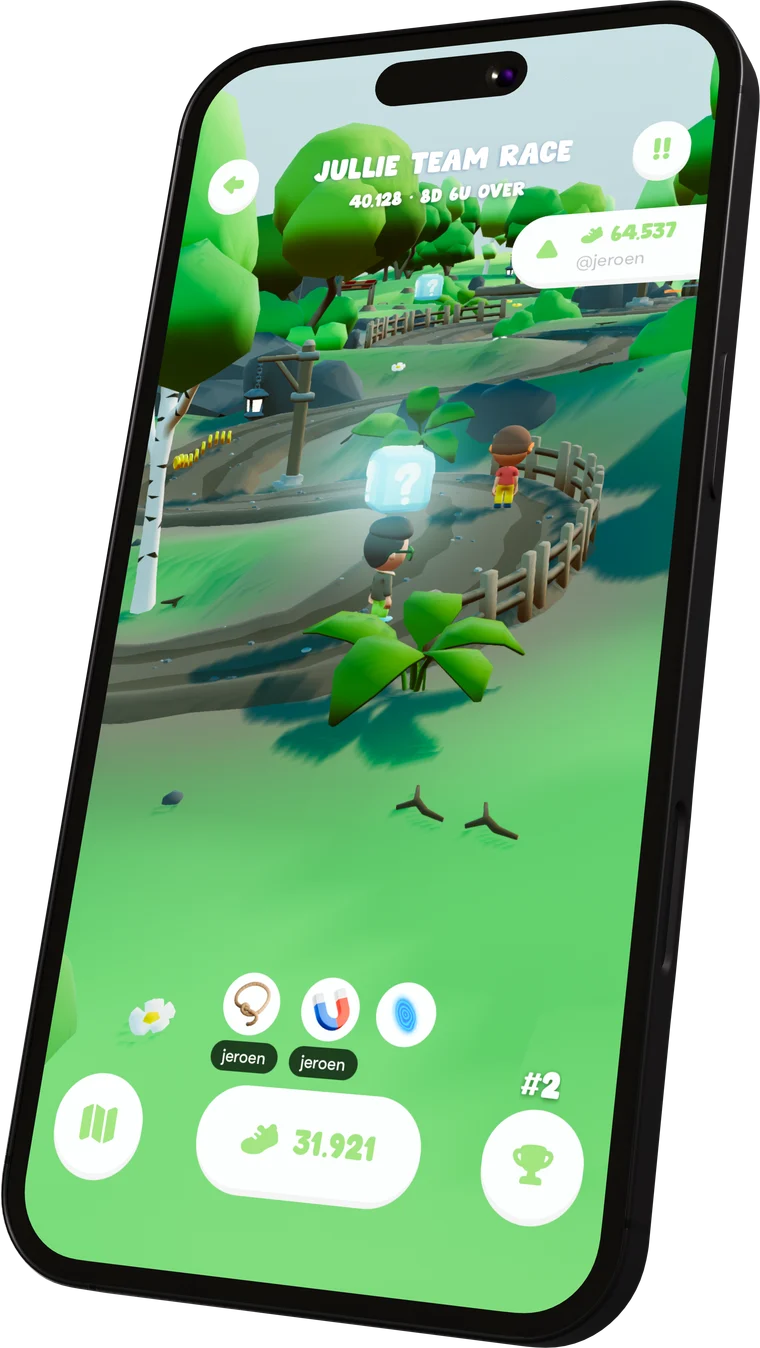
In Lawa, a step challenge is a race. Colleagues race through a game world with their real steps, grab power-ups and walk on their own or with their team. Lawa sets up the race in the organisation's branding, with teams and locations, and the People team follows participation in a dashboard.
Step challenge for companies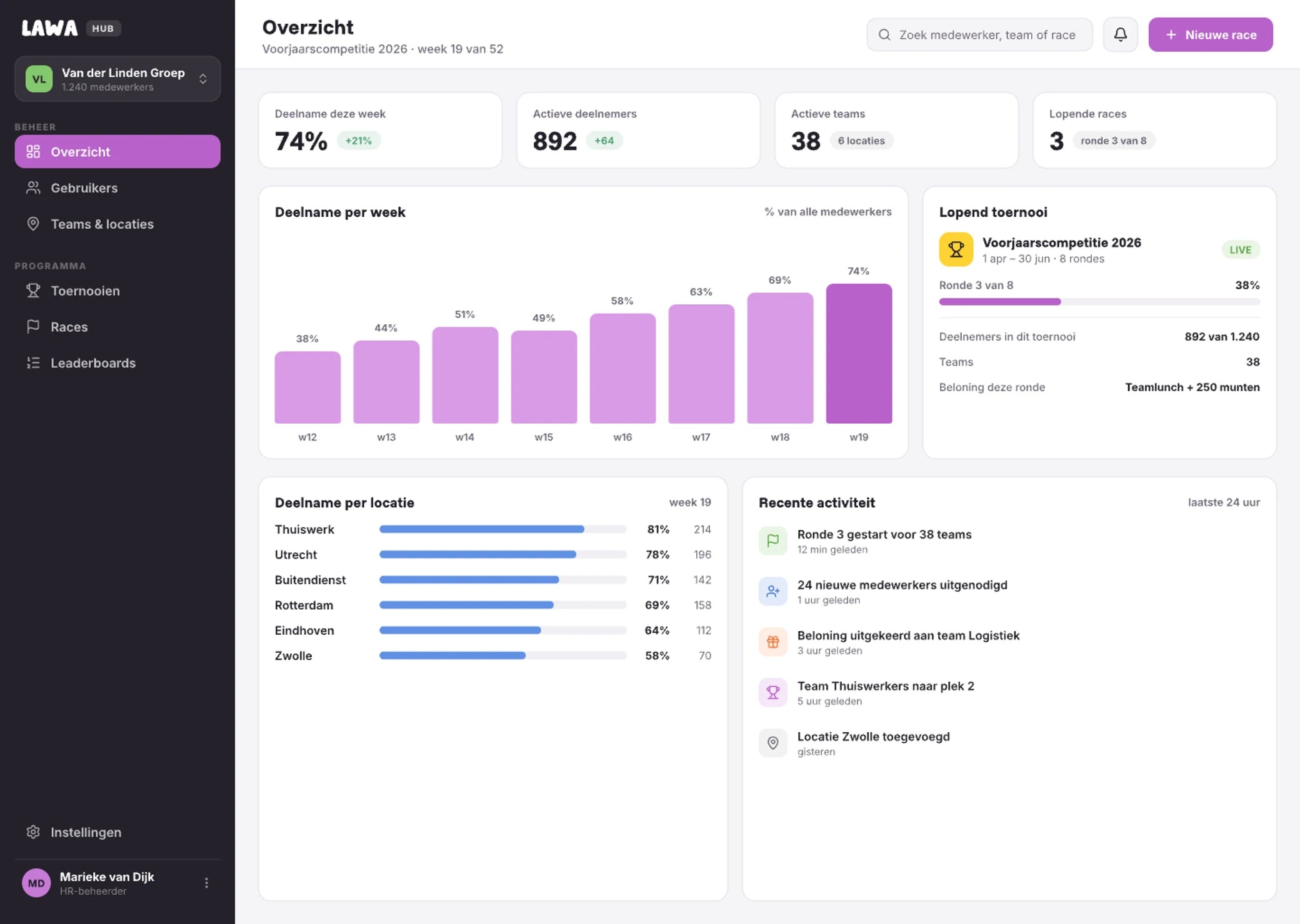
Frequently asked questions
What is a step challenge?
A step challenge is a competition in which participants take as many steps as they can over a set period, on their own or as a team. At work, colleagues, departments or locations compete against each other. The steps come from the step counter on a phone or watch, and a leaderboard shows who is ahead.
How does a step challenge work?
You pick a start and end date, put participants into teams and invite everyone to an app. Participants connect their step counter, after which their steps count automatically. During the challenge the leaderboard updates itself, and at the end there are winners per person or per team.
How do I organise a step challenge?
Decide on the goal and the period first. Then form teams, choose an app that counts the steps and send one clear invitation covering what, why, how long and what is visible. Have a few prizes ready and share the results afterwards.
How long does a step challenge last?
Usually one to four weeks. For a first time or a single department, one to two weeks is enough. A company-wide challenge often runs two to four weeks. Longer is possible, but works better in rounds, so there is always a fresh start.
Can everyone take part in a step challenge?
Everyone who walks can take part. You do not need to be sporty: every step counts, and in a team everyone contributes. Taking part is voluntary. People who cannot record steps, for example because of a disability, can join in less easily. Agree beforehand how you involve those colleagues, for example as team captain.
What is the difference between a step challenge and a step competition?
In practice there is none: they are two words for the same thing. A step competition puts a little more weight on the contest, with rounds, a leaderboard and winners.
What is the difference between a step challenge and a walking challenge?
A step challenge counts the steps of your normal day. A walking challenge is broader: it can also be a distance goal in kilometres, or a walk you do together on one day.
Which step counter do you need?
The step counter participants already have, on their phone or watch. Buying a separate pedometer is usually not needed. Lawa works with, for example, Apple Health, Health Connect, Samsung Health, Garmin and Google Health (Fitbit).
What data does a step challenge keep?
A step challenge only needs steps. Routes, location and heart rate are not part of it. Tell participants beforehand what colleagues can see of each other, usually the name, the team and the steps on the leaderboard.
What determines the cost of a step challenge?
Mainly the number of employees who can take part and how often you run a challenge. Prizes for the winners and the time it takes to organise also count. Tracking it yourself in spreadsheets costs little money but a lot of time; an app counts the steps and keeps the leaderboard for you.
How does a step challenge work with Lawa?
In Lawa, a step challenge is a race in a game. Lawa sets up the race with the organisation's branding, teams and locations. Colleagues install the Lawa app, connect their step counter and race with their real steps. The People team sees participation per team and location in a dashboard.